
U-Ming 2026 Annual Shareholders' Meeting - Navigating Change, Powering Growth Towards 100 Vessels
Strong Performance and Steady Shareholder Returns - Outstanding First-Quarter Results
U-Ming Marine Transport Corporation held its 2026 Annual General Meeting in Taipei this morning (21 May 2026) at 9:00 a.m., during which all resolutions, including the approval of the 2025 financial statements and earnings distribution proposal, were successfully passed. (Photo Credit: U-Ming)
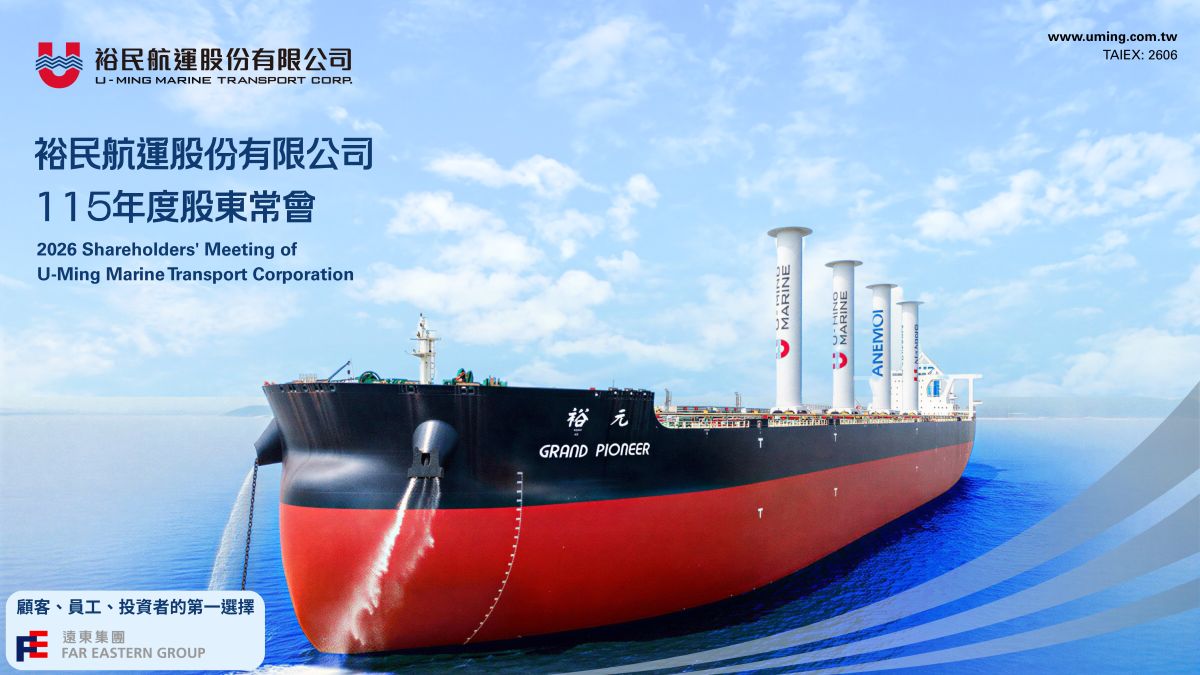
For 2025, U-Ming reported consolidated revenue of NT$15.566 billion, operating profit of NT$3.704 billion, and net profit after tax of NT$3.64 billion, with earnings per share (EPS) of NT$4.31. Shareholders also approved a cash dividend distribution of NT$2.80 per share, reaffirming the Company’s commitment to a stable and high dividend payout policy as a tangible return to shareholders.
As of the end of the first quarter of 2026, U-Ming’s accumulated undistributed earnings and legal reserve totalled NT$21.551 billion, equivalent to approximately NT$25.5 distributable earnings per share, demonstrating the Company’s solid financial foundation and strong profitability.
U-Ming also delivered outstanding first-quarter results in 2026, recording consolidated revenue of NT$3.892 billion and net profit after tax of NT$988 million, representing a more than threefold increase compared to the same period last year.
2026 Dry Bulk Shipping Market Outlook - Structural Transformation Driving Continued Recovery Momentum
The dry bulk shipping market has demonstrated strong resilience in 2026. According to the latest forecast by global shipping research firm Clarksons, although nominal vessel supply growth is still expected to slightly exceed demand growth, the effective supply of vessels has tightened substantially due to longer voyage distances and geopolitical developments, supporting a continued improvement in market fundamentals.
Freight rates at the start of the year also broke away from the traditionally weaker seasonal trend, with Capesize vessels leading the market recovery, reflecting stronger market confidence and structural improvement.
U-Ming noted that the development of the Simandou iron ore project in West Africa and growing bauxite exports from Guinea continue to drive long-haul transportation demand, significantly increasing ton-mile demand and becoming a key growth driver for the large dry bulk vessel segment. In addition, global supply chain restructuring, rising demand for alternative energy, and post-war reconstruction needs continue to support transportation demand.
On the supply side, while overall vessel supply may appear relatively ample, effective fleet capacity is expected to remain constrained. More than 3,000 vessels are projected to enter their third special survey cycle in 2026, with prolonged dry-docking periods limiting short-term market supply.
At the same time, increasingly stringent environmental regulations, a growing proportion of aging vessels, and historically low newbuilding orders are expected to continue limiting fleet expansion, thereby supporting freight rates.
U-Ming further stated that, supported by recovering iron ore and grain transportation demand alongside limited fleet supply growth, the Baltic Dry Index (BDI) has already shown signs of recovery in 2026. With market fundamentals continuing to improve, the dry bulk shipping industry is gradually emerging from the bottom of the cycle and entering a phase of structural recovery.
Diversifying Green Shipping Initiatives - Advancing Toward 10 Million DWT and Net-Zero Goals
U-Ming stated that, in response to global supply chain restructuring and the energy transition trend, the Company will continue expanding its core fleet while accelerating investments in low-carbon and new energy sectors to strengthen long-term competitiveness.
In the third quarter of this year, U-Ming’s first liquefied natural gas (LNG) carrier will officially join the operating fleet, marking an important milestone in the Company’s diversification strategy and further expanding its presence in energy transportation.
In addition, U-Ming continues to advance its fleet expansion plans to enhance competitiveness in the global market. During the second quarter, the Board approved the construction of four 210,000-DWT Capesize bulk carriers and four 64,000-DWT Ultramax bulk carriers, moving toward the Company’s “dual growth” target of exceeding 100 vessels and surpassing 10 million DWT in total carrying capacity.
In the area of green shipping, U-Ming plans to introduce biodiesel as an alternative fuel and will take the lead in conducting onboard trial operations and operational verification within its owned dry bulk fleet, actively promoting the decarbonization transformation of the dry bulk shipping sector.
Following implementation, the initiative is expected not only to reduce carbon emissions, but also to mitigate the impact of carbon costs and the European Union Emissions Trading System (EU ETS), while improving Carbon Intensity Indicator (CII) performance and route competitiveness.
U-Ming is also continuing to expand its presence in the Asia-Pacific offshore wind power market. Its subsidiary, U-Ming Marine Offshore Co., Ltd, has jointly established UPO Holdings Co., Ltd with the UK-based Purus to strengthen regional offshore wind operation and maintenance capabilities.
Looking ahead, U-Ming will continue deepening the application of green shipping technologies and expanding into clean energy markets as it steadily advances toward sustainable shipping goals.
Strengthening Sustainability Governance - Becoming an ESG Benchmark in the Industry
In 2025, U-Ming was once again selected as a constituent of the FTSE4Good Taiwan Index and was also named among the “Top 100 Taiwan Companies Selected by Foreign Investors,” reflecting the Company’s strong performance in sustainability governance and corporate value creation.
U-Ming also received multiple recognitions at the Taiwan Corporate Sustainability Awards (TCSA), including the “Top 100 Sustainability Exemplary Enterprises Award,” the “Platinum Award for Sustainability Reporting,” and the “Workplace Well-being Award.”
In addition, the Company has been recognized with the HR Asia “Best Companies to Work for in Asia” award for five consecutive years, demonstrating its continued commitment to ESG governance, employee care, and a positive workplace culture.
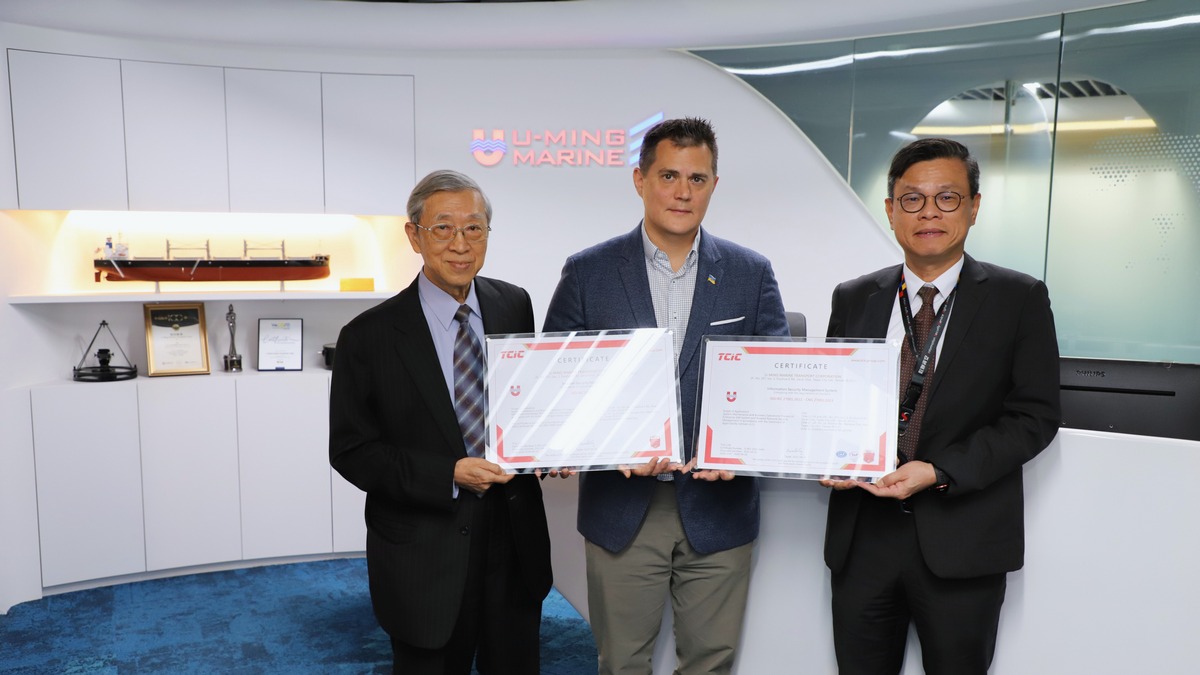
The Company also received the Gold Award at the ESG Transportation Sustainability Awards, was selected as one of Business Weekly’s “Top 100 Carbon Competitiveness Companies,” and obtained multiple ISO international certifications, further strengthening its low-carbon transformation and sustainable business development strategy.
Fleet Information
U-Ming currently operates a diversified fleet comprising Capesize, Panamax, Post-Panamax, Ultramax, Cement Carriers, Very Large Crude Carriers (VLCCs), and Very Large Ore Carriers (VLOCs). The Company also owns Crew Transfer Vessels (CTVs), Commissioning Service Operation Vessels (CSOVs), and LNG carriers.
Including wholly owned, jointly owned and under-construction vessels, U-Ming’s total fleet capacity is 84 vessels with a combined deadweight tonnage approaching 10 million DWT.
Overseas, U-Ming has established subsidiaries in Singapore, Hong Kong, and Xiamen to support its global operations, while domestically it operates U-Ming Marine Offshore Co., Ltd, which focuses on green energy transportation services.
Business and Company
News Type
UN SDG
Share
Download
Source
U-Ming